Sleep hygiene: what the research actually covers
The phrase "sleep hygiene" refers to a set of behavioral and environmental practices that appear in sleep quality literature. Here is what those practices are and how they relate to sleep biology.
Understanding what happens during a night of sleep
Before discussing lifestyle factors, it helps to know what you are trying to protect. Sleep is not a uniform state. It cycles through distinct stages, each with different functions.
Stage 1 NREM: The Entry Point
This is the lightest sleep stage, typically lasting a few minutes. Muscle activity slows. Eye movements become slow and rolling. Brain waves begin transitioning from the alert beta waves of wakefulness toward slower theta waves. This stage is easy to wake from.
Stage 2 NREM: Light-to-Medium Sleep
Stage 2 makes up a large portion of total sleep time. The brain produces sleep spindles, brief bursts of oscillatory activity thought to play a role in memory consolidation. Core body temperature drops and heart rate slows. K-complexes also appear here, thought to suppress cortical arousal.
Stage 3 NREM: Slow-Wave Sleep
Also called deep sleep, this stage is characterized by delta waves, the slowest brain waves measured during sleep. Growth hormone is released predominantly during this stage. Physical tissue repair processes are associated with slow-wave sleep. This is the hardest stage to wake from, and waking from it often produces grogginess.
REM Sleep: Rapid Eye Movement
REM sleep is when most vivid dreaming occurs. Brain activity during REM resembles wakefulness in some ways. This stage is associated with emotional memory processing and creative thinking. REM periods get longer across the night, with the most substantial REM occurring in the final sleep cycles.
Practices associated with sleep quality in research
These are the behavioral and environmental factors that appear most consistently in sleep research literature. They are described here for educational purposes, not as prescriptions.
Consistent Sleep Timing
Research on circadian biology consistently identifies regular sleep and wake times as a factor in sleep quality. Your circadian clock anticipates sleep based on timing cues. Irregular timing disrupts this anticipation, affecting how quickly you fall asleep and how restorative sleep feels. Both the sleep time and the wake time appear to matter in the literature.
Morning Light Exposure
Light is the primary zeitgeber, the external cue that sets your circadian clock. Bright light in the morning, particularly within an hour of waking, signals your suprachiasmatic nucleus to anchor the start of your biological day. This affects when melatonin rises in the evening, which in turn influences sleep onset timing.
Evening Light Reduction
Short-wavelength blue light suppresses melatonin production via the retinohypothalamic tract. Evening exposure to bright light, especially from screens, can delay melatonin onset. Research has examined the effects of blue-light filtering and screen dimming in the hours before sleep, with results suggesting effects on melatonin timing and sleep onset.
Bedroom Temperature
Core body temperature naturally decreases as part of sleep initiation. A cooler sleeping environment facilitates this drop. Sleep research has studied ambient temperature ranges and their relationship to sleep onset and slow-wave sleep. The general finding is that a cooler room is associated with better sleep architecture than a warmer one.
Caffeine Timing
Caffeine works by blocking adenosine receptors. Adenosine is a byproduct of cellular metabolism that accumulates throughout the day, increasing sleep pressure. When caffeine blocks those receptors, it reduces the perceived sleep pressure signal. Caffeine has a half-life that varies by individual, but studies suggest that consumption in the afternoon can affect sleep architecture even when the person does not feel alert.
Physical Activity
Regular physical activity has been associated with improved sleep quality in multiple observational and interventional studies. The timing of exercise relative to sleep has also been studied. High-intensity exercise close to bedtime can elevate core temperature and cortisol, which may affect sleep onset for some individuals, though this varies considerably.
The bedroom as a sleep signal
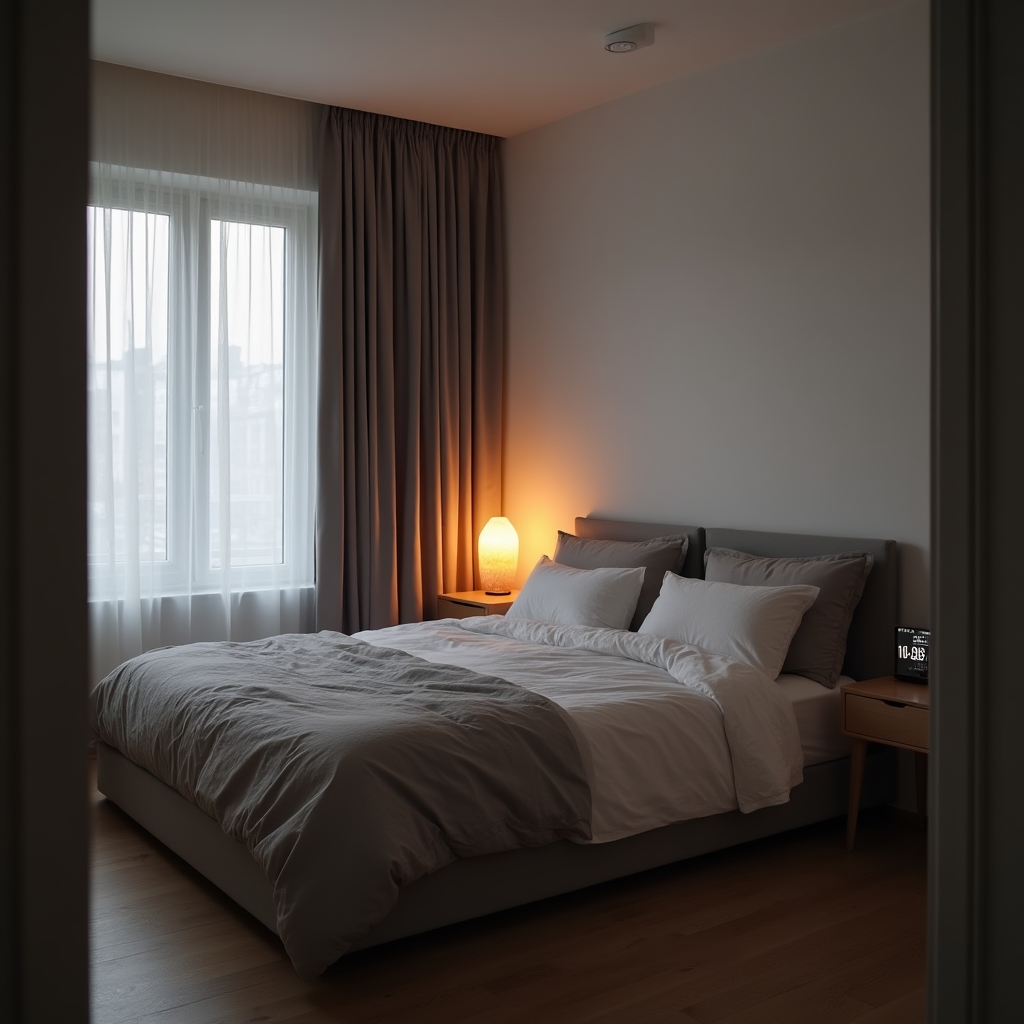
Stimulus control is a concept from sleep research that describes the association between your bedroom environment and sleep. When the bedroom is used primarily for sleep, your brain learns to associate it with sleep onset. When it is also used for work, entertainment, or stimulating activities, that association weakens.
Darkness, quiet, and a cooler temperature are the three environmental factors most consistently discussed in sleep quality literature. Noise interrupts sleep continuity even when it does not cause full awakening. Light suppresses melatonin. Temperature affects the speed of core body cooling at sleep onset.
This is educational context, not a prescription. Individual responses to environmental factors vary, and clinical sleep issues require professional evaluation.
Want to explore the compounds side?
We cover melatonin, magnesium, and L-theanine in our Wellness Topics section, including what research has examined and how each compound relates to sleep biology.
Explore Wellness Topics